



Diplomatic Push Meets Sharp Criticism
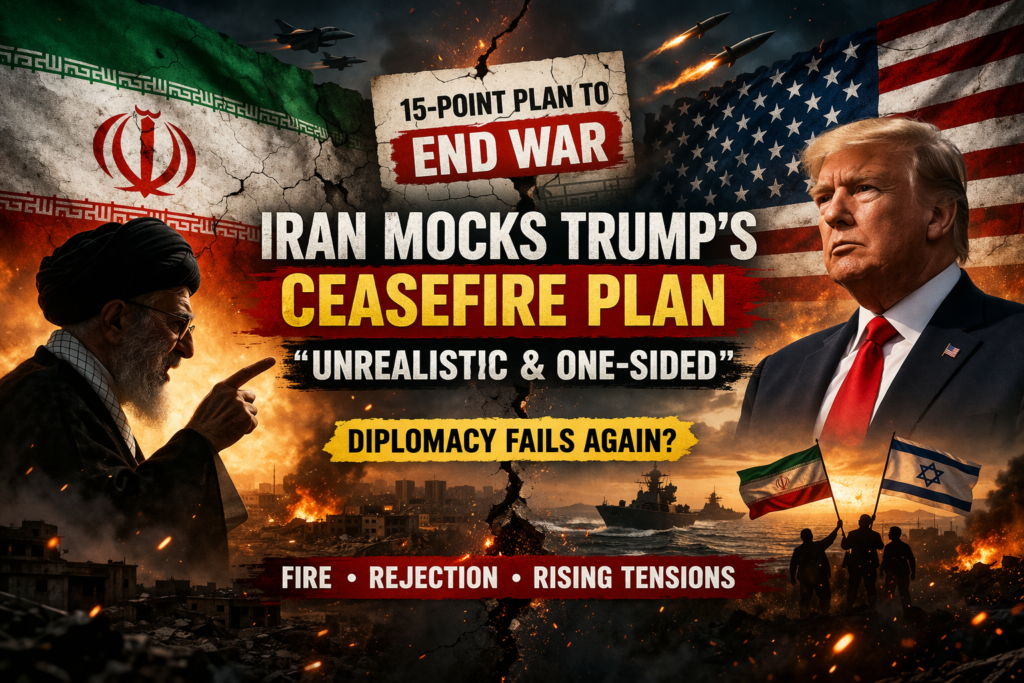
The ongoing conflict in the Middle East has taken a new turn as Iran openly mocked former U.S. President Donald Trump over his proposed 15-point plan to end war. The plan, aimed at securing a ceasefire between Iran and Israel, has been dismissed by Tehran as unrealistic and one-sided.
Despite Washington’s push for diplomacy, Iran’s strong rejection highlights deep mistrust and raises doubts about whether the proposed framework can bring any meaningful progress toward peace. As tensions continue to escalate, the fate of the 15-point plan to end war remains uncertain.
What Is Trump’s 15-Point Plan to End War?
The 15-point plan to end war is a comprehensive proposal reportedly sent by the United States to Iran through intermediaries, aiming to halt ongoing hostilities and establish conditions for long-term peace.
According to reports, the plan includes several key demands:
- Complete dismantling of Iran’s nuclear facilities
- A permanent end to uranium enrichment within Iran
- Restrictions on Iran’s ballistic missile program
- Ending support for regional proxy groups
- Reopening and securing the Strait of Hormuz for global trade
In return, the U.S. has reportedly offered:
- Gradual lifting of economic sanctions
- Assistance with a civilian nuclear program under international supervision
- Potential economic and diplomatic normalization
However, critics argue that many of these conditions mirror previous proposals that failed to gain acceptance, making the current 15-point plan to end war appear more like a rehashed framework rather than a fresh diplomatic breakthrough.
Iran’s Strong Reaction and Mockery
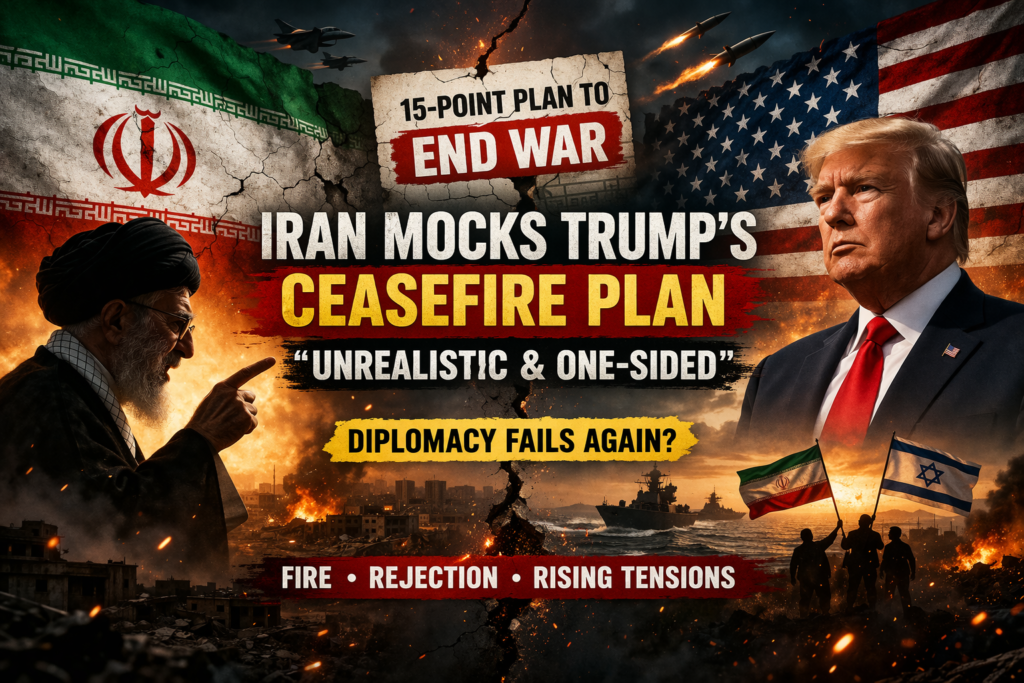
Iran’s response to the 15-point plan to end war has been blunt and dismissive. Iranian officials have ridiculed the proposal, with military representatives stating that the United States is essentially “negotiating with itself.”
Tehran has accused Washington of attempting to present a strategic setback as a diplomatic success. Officials described the plan as an effort to “dress up defeat as agreement,” signaling a lack of seriousness in negotiations.
Iran’s skepticism is rooted in past experiences, where diplomatic engagements were followed by military actions. As a result, Iranian leadership has expressed deep distrust toward U.S. intentions, suggesting that the proposal is more about optics than genuine conflict resolution.
Why Iran Rejects the 15-Point Plan to End War
There are several reasons why Iran has rejected the 15-point plan to end war:
1. One-Sided Demands
Iran believes the proposal heavily favors U.S. and Israeli interests while requiring major concessions from Tehran without equivalent guarantees.
2. Lack of Trust
Iranian officials argue that previous negotiations were undermined by subsequent military actions, making it difficult to trust new proposals.
3. Expanded Conflict Issues
The current conflict goes beyond nuclear concerns. Iran is now demanding:
- Security guarantees against future attacks
- Removal of U.S. military presence in the region
- Greater control over strategic waterways like the Strait of Hormuz
These demands are not fully addressed in the 15-point plan to end war, creating a major gap between both sides.
Ongoing Conflict Despite Ceasefire Efforts
While the 15-point plan to end war aims to de-escalate tensions, the reality on the ground tells a different story. Airstrikes and missile exchanges between Iran and Israel continue, indicating that diplomacy has yet to translate into action.
Recent developments include:
- Israeli strikes targeting Iranian military infrastructure
- Iranian missile attacks on Israeli cities and U.S. bases
- Drone attacks reported in parts of the Middle East
These ongoing hostilities demonstrate that the conflict remains active, and the 15-point plan to end war has not succeeded in achieving even a temporary ceasefire.
Global Impact of the Failed Ceasefire Push
The rejection of the 15-point plan to end war has significant global consequences:
1. Energy Market Disruptions
The conflict has disrupted oil supply routes, especially through the Strait of Hormuz, causing price volatility and inflation concerns worldwide.
2. Rising Geopolitical Tensions
The involvement of multiple countries, including Gulf states and global powers, increases the risk of a broader regional conflict.
3. Diplomatic Divisions
While the U.S. continues to push its plan, other international players have called for an immediate ceasefire before further negotiations, highlighting divisions among global allies.
Can the 15-Point Plan to End War Still Succeed?
Despite Iran’s rejection, some analysts believe there is still room for negotiation—if the proposal is revised.
Possible Changes That Could Revive Talks:
- Inclusion of mutual concessions rather than unilateral demands
- Security guarantees for Iran
- Neutral third-party mediation involving countries like Qatar or Turkey
- A phased approach focusing first on a ceasefire, then long-term agreements
However, without these adjustments, the current 15-point plan to end the war is unlikely to gain traction.
Conclusion
A Diplomatic Effort at a Crossroads
The 15-point plan to end the war represents a significant diplomatic attempt to resolve one of the most volatile conflicts in the Middle East. However, Iran’s outright rejection and public mockery of the proposal underscore the deep divide between the two sides.
With ongoing military actions and rising geopolitical tensions, the chances of an immediate ceasefire remain slim. The situation highlights a critical reality: peace cannot be imposed through one-sided proposals—it requires trust, compromise, and genuine dialogue.
As the world watches closely, the future of the 15-point plan to end war will depend on whether global leaders can bridge the gap between political ambition and diplomatic reality.